
What Happens to Digital Signage In 100°F Temperatures?
Posted by Emilyann Allen on 27th Aug 2026
What Happens to Digital Signage in 100°F Temperatures? | The Display Shield
When businesses install outdoor digital signage, most people immediately think about one major threat: rain. Water damage is an obvious concern because heavy storms, unexpected downpours, and moisture exposure can create serious problems for electronic equipment. This is why many businesses focus on weather-resistant displays and protective solutions designed to keep water away from their technology.
However, there is another environmental threat that often receives far less attention, which is heat. A hot summer day reaching 100°F may not seem as dangerous as a storm rolling in, but extreme temperatures can put significant stress on digital displays and the electronic components that keep them running.

Digital signage already produces heat while operating, and when you add direct sunlight, long operating hours, and high outdoor temperatures into the mix, your outdoor digital display can be pushed far beyond the conditions it was designed to handle. The result can be reduced performance, unexpected shutdowns, costly repairs, and a shorter lifespan for your technology investment.
For businesses that rely on digital signage to attract customers, share information, or generate revenue, protecting against heat is not just an extra precaution. It is an important part of keeping your displays reliable throughout the year.
Table of Contents
- Why Heat Is a Hidden Threat to Digital Displays
- What Happens Inside a Digital Display When Temperatures Rise?
- The Real Cost of Heat-Damaged Digital Signage
- Why Outdoor Digital Displays Face Greater Heat Challenges
- How The Display Shield Helps Beat the Heat
- Protecting Your Digital Signage Investment Year-Round
- FAQs
Why Heat Is a Hidden Threat to Digital Displays
When people think about protecting outdoor electronics, rain is usually the first thing that comes to mind. After all, water and electronics are a bad combination, and a heavy storm can cause immediate damage if equipment is not properly protected. But heat can be just as damaging, and unlike a storm, it can affect your display day after day without being immediately noticeable.
A digital display installed outdoors is exposed to the full force of its surroundings. During a 100°F day, the screen is not only dealing with the temperature of the air around it, but also the heat absorbed from direct sunlight and the additional heat created by its own internal components. This creates a challenging environment where the display has to work harder just to maintain normal operation.
The hotter the conditions become, the more stress is placed on the technology inside the display. While many commercial displays are built for durability, even high-quality equipment has limits when exposed to constant extreme temperatures without adequate protection.
|
Potential Impact on Digital Displays |
|
|
70–80°F |
Generally more manageable operating conditions |
|
90°F+ |
Increased heat exposure and greater strain on components |
|
100°F+ |
Higher risk of overheating, reduced performance, and heat-related issues |
One of the biggest challenges with heat damage is that it often develops slowly. Businesses may not notice a problem until the display begins performing inconsistently, loses brightness, or eventually stops working altogether.
What Happens Inside a Digital Display When Temperatures Rise?
To understand why heat can damage digital signage, it helps to look at what is happening inside the display itself. Digital screens contain several electronic components that work together to create images, process information, and power the display. Like all electronics, these components generate heat during normal operation.
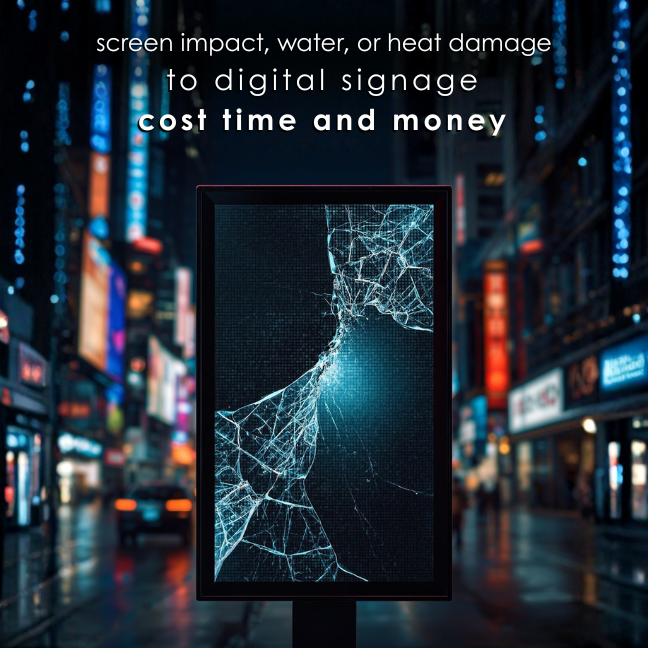
Under normal conditions, the display is designed to manage this heat and continue operating effectively. Problems begin when the surrounding environment adds additional heat that the display cannot easily release. When temperatures rise, internal components can experience increased stress, which may affect performance and shorten the equipment’s overall lifespan.
A display exposed to excessive heat may begin showing warning signs before complete failure occurs. These issues can include dimming, flickering, slower performance, unexpected shutdowns, or inconsistent operation during the hottest parts of the day. While these problems may seem minor at first, repeated exposure can eventually lead to more serious damage.
|
What Businesses May Notice |
|
|
Overheating |
Display shuts down or reduces performance |
|
Component stress |
Shorter equipment lifespan |
|
Heat buildup |
Poorer reliability during hot conditions |
|
Reduced brightness |
Lower visibility for customers |
Think of it like driving a vehicle through extreme conditions without proper maintenance. The vehicle may continue moving, but the additional stress can cause problems sooner than expected. Digital displays work the same way... the more environmental stress they experience, the greater the need for proper protection.
The Real Cost of Heat-Damaged Digital Signage
When a digital display fails, the cost goes far beyond replacing the screen itself. For many businesses, digital signage plays an important role in daily operations, customer communication, and revenue generation. A failed display can interrupt these activities and create unnecessary headaches.
A restaurant may depend on digital menu boards to promote specials and manage customer orders. A gas station may use outdoor displays to advertise promotions and attract passing drivers. A retail business may rely on digital signage to highlight products and influence purchasing decisions.

When these displays stop working, businesses may experience lost opportunities, repair expenses, installation costs, and operational disruption. For organizations with multiple locations, the financial impact can quickly add up when several displays face the same environmental challenges.
This is why preventative protection is becoming increasingly important. Instead of waiting for a display to fail and dealing with the consequences, businesses can take steps to reduce risks before they become expensive problems.
Why Outdoor Digital Displays Face Greater Heat Challenges
Outdoor digital signage faces a unique combination of challenges because it operates in an environment that businesses cannot fully control. Unlike indoor displays, outdoor screens must deal with changing temperatures, direct sunlight, dust, and long periods of operation throughout the day.
Direct sunlight is one of the biggest contributors to heat exposure. A display positioned in an open area can absorb significant heat throughout the day, especially during the peak afternoon hours when temperatures are at their highest.
Operating hours also play an important role. Many outdoor displays run for extended periods, meaning they are generating their own heat while also dealing with the surrounding environment. Without proper airflow, that heat can become trapped and place additional strain on the equipment.
Businesses also need to consider that outdoor-rated does not always mean completely protected from every environmental challenge. It is always wise to check operating temperatures and warranty fine print. A display may be designed to handle outdoor conditions, but additional protection can help improve reliability and provide an extra layer of defence against harsh environments.
How The Display Shield and The TV Shield PRO Help Beat the Heat
Protecting digital signage from extreme temperatures requires more than simply choosing a durable display. Businesses need to consider how their screens will handle heat buildup, airflow, sunlight exposure, and long operating hours in outdoor environments. The Display Shield is designed to help businesses protect their digital displays from challenging conditions. By creating a protective barrier around the display, it helps reduce exposure to environmental risks while providing additional support for outdoor installations.

One of the key features that helps address heat concerns is built-in ventilation with cooling fans. These fans help improve airflow around the display, allowing excess heat to move away from the equipment and creating a more stable operating environment. This is especially valuable for displays installed in direct sunlight or areas where temperatures regularly reach extreme levels. Rather than allowing heat to build up around the screen, a properly designed enclosure helps businesses manage the conditions their technology faces every day.
For businesses using vertical outdoor displays, The Display Shield outdoor display enclosure (which is available in horizontal and vertical formats) or The TV Shield PRO Portrait provides additional protection, including shatterproof defense and airflow management for demanding outdoor environments.
Protecting Your Digital Signage Investment Year-Round
Digital signage is a valuable investment for businesses across many industries. Whether it is helping customers make decisions, promoting products, sharing information, or supporting daily operations, a reliable display plays an important role in business success. Protecting that investment means thinking beyond the most obvious threats. Rain and moisture are important considerations, but heat deserves the same level of attention because it can quietly affect performance over time.
A 100°F day may not seem like a major concern when compared to severe weather, but repeated exposure to extreme temperatures can create long-term challenges for outdoor digital displays. Businesses that take preventative steps can reduce the risk of unexpected failures and help their technology perform reliably for longer. The best time to protect your digital signage is before heat becomes a problem. With the right protection in place, businesses can keep their displays working when they need them most.
FAQs
Can extreme heat damage outdoor digital displays?
Yes. Extreme heat can place additional stress on the electronic components inside digital displays. Over time, repeated exposure to high temperatures can reduce performance, shorten equipment lifespan, and increase the risk of failures, which is why internal thermal electronics management and sometimes external temperature regulation are important.
Is heat or rain a bigger threat to outdoor digital signage?
Both heat and rain can damage outdoor displays, but heat is often overlooked because its effects are usually gradual. While water damage may happen suddenly, heat-related issues can develop slowly through repeated exposure.
Why does my digital display become darker in hot weather?
Some displays may reduce brightness or performance when internal temperatures become too high. This can happen because the system is attempting to reduce stress and protect internal components from excessive heat.
Do outdoor-rated displays still need additional protection?
Yes. Outdoor-rated displays are designed to handle tougher conditions, but they are still exposed to heat, sunlight, dust, and changing weather. Additional protection can help businesses improve reliability and extend the useful life of their equipment.
How do cooling fans help protect digital signage?
Cooling fans improve airflow around the display and help move excess heat away from the equipment. This can help create a more stable environment and reduce the strain caused by extreme temperatures.
What businesses benefit from outdoor display protection?
Any business using outdoor digital signage can benefit from additional protection. This includes gas stations, restaurants, retail stores, schools, property developments, and organisations that rely on outdoor displays to communicate with customers.