

Display Enclosures for Emergency Rooms | The TV Shield PRO Lite
Posted by Emilyann Allen on 9th Feb 2026
Indoor and Outdoor Display Enclosures for Emergency Rooms & Hospitals
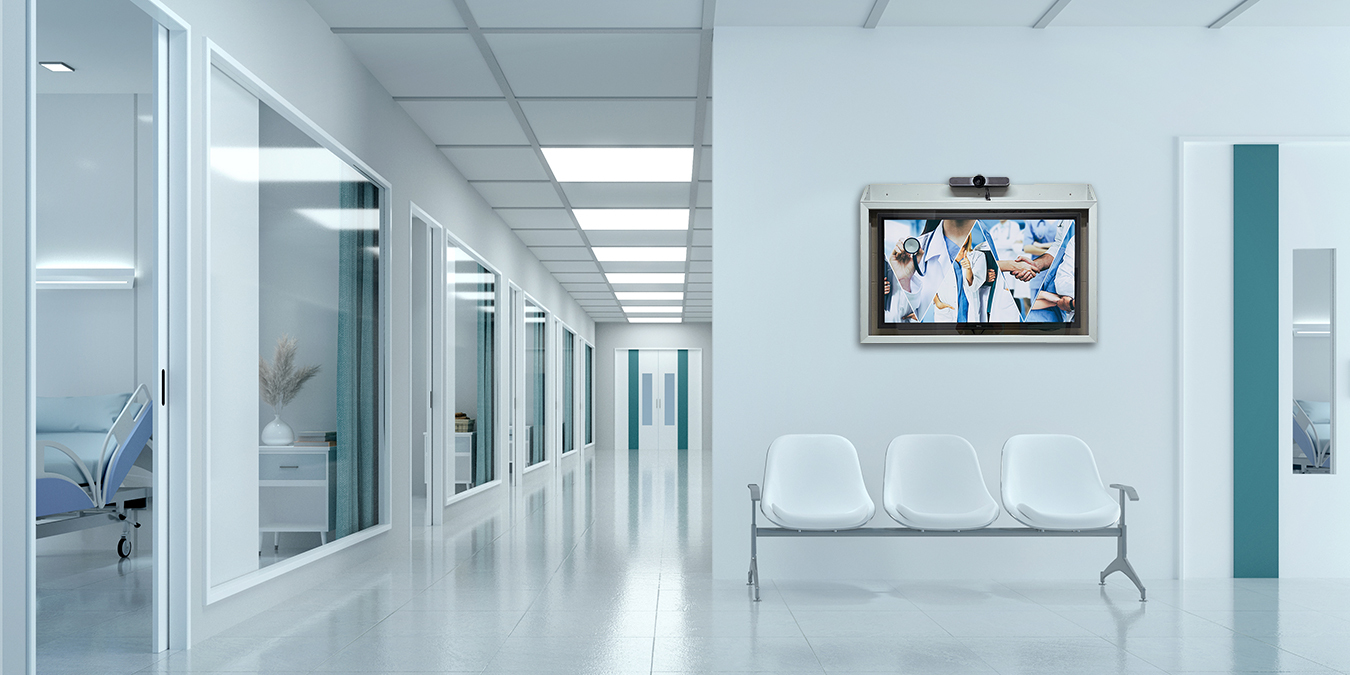
Emergency rooms are some of the most demanding environments in healthcare. Every second counts, every surface is touched, and every piece of equipment must survive constant use. TV screens and digital signage have become important tools in modern ERs because they improve communication, speed up processes, and help both staff and patients navigate chaotic moments. The challenge is that ERs are hard on displays. Screens face fluids, impact, disinfectants, nonstop operation, sometimes high traffic (potential tampering), and more, which can shorten their lifespan if they are not protected.
That is where indoor and outdoor display enclosures come in. A well-designed enclosure helps hospitals keep their operations smooth without worrying about frequent TV replacements or safety risks. This guide explores the role of display enclosures in emergency rooms and hospitals. It explains why products like The TV Shield PRO Lite (indoor use), The Display Shield (outdoor use), and The TV Shield PRO (outdoor use) are smart investments.
Table of Contents
- Why Emergency Rooms Rely on Digital Displays
- The Harsh Realities ER Screens Face
- Indoor Display Enclosures for Emergency Rooms
- Outdoor Displays for ER Walkways and Entrances
- Why The TV Shield PRO Lite, The Display Shield, and The TV Shield PRO Make Sense for Hospitals
- Conclusion
- FAQs
Why Emergency Rooms Rely on Digital Displays
Hospitals use digital displays for far more than patient entertainment. In emergency rooms, screens support the flow of information that keeps the department moving. They can display wait times, patient triage details, bed availability, emergency alerts, safety instructions, staff communication, or even detail procedure angles and footage that is useful in operating rooms.

Digital displays help reduce confusion for patients and family members. Instead of asking repeated questions or feeling uncertain, visitors can quickly check screens for instructions or updates. Staff benefit too because displays help reduce interruptions and provide clear, consistent messages for everyone.
Because the ER environment moves rapidly, TVs and digital signage also help hospitals stay adaptable. Staff can update content in real time, which means the information on screen always matches what is happening in that moment.
The Harsh Realities ER Screens Face:
Emergency rooms are environments where anything can happen. Screens are exposed to risks that most commercial displays never encounter.
Frequent Disinfecting
Hospitals sanitize surfaces constantly. Screens may need liquid cleaning; enclosures can block water damage, moisture, and some chemicals.
Impact from Equipment or Carts
ERs are fast-paced. Gurneys, wheelchairs, supply carts, and medical devices often move quickly. A sudden bump can crack or damage an unprotected screen.
Exposure to Fluids
ERs deal with bodily fluids and spills. Even beverage containers from waiting rooms occasionally end up splashing onto screens.
Constant Visibility and Nonstop Use
Displays in waiting rooms and hallways run nearly all day. Heat buildup, dust, and long operating hours all take a toll unless temperature regulation is provided for the TV (quality TV enclosures off thermoastic temperature regulation).
Outdoor Exposure Near Entrances
Some hospitals use outdoor screens to guide patients toward emergency entrances or communicate critical messages. Outdoor displays face rain, sun, humidity, and extreme temperature fluctuations.
The combination of these hazards makes it clear that hospitals need a protective layer for their screens. Without it, displays become costly to replace and may pose safety risks if cracked or damaged.
Indoor Display Enclosures for Emergency Rooms: The TV Shield PRO Lite
Indoor display enclosures help hospitals get more value out of their screens by extending their lifespan and protecting them from the stresses of ER environments. A durable enclosure creates a barrier between the screen and the hazards around it while still giving staff and patients a clear view of the content.
There are several advantages to using indoor display enclosures in emergency rooms. First, they allow hospitals to use off-the-shelf TV models instead of expensive commercial medical displays. This can reduce costs without sacrificing performance. Second, enclosures provide protection from cleaning some chemicals and impact, which can save hospitals from frequent screen replacements.
Display enclosures for emergency rooms also increase safety. Shatterproof TV enclosures prevent flying or fallen pieces of glass, so there is no risk of injury. This matters in environments with children, elderly patients, or tightly packed waiting areas.
With an affordable enclosure like The TV Shield PRO Lite, hospitals get the benefit of a lightweight, tamper-resistant design that locks securely. Staff can clean it easily, which helps maintain hygiene without risking damage to the underlying display.
Outdoor Displays for ER Walkways and Entrances
Outdoor screens play a growing role in emergency departments. They can be used to direct visitors to the correct entrance, provide after-hours instructions, or share emergency alerts during high-traffic periods. This is especially helpful when patients arrive in distress and cannot easily navigate a large hospital campus.
The challenge is that outdoor screens face harsh elements. Sunlight causes glare and heat, rain can short out electronics, and wind-driven debris can strike unprotected displays. Without a proper waterproof and shatterproof TV enclosure, screens can fail quickly.
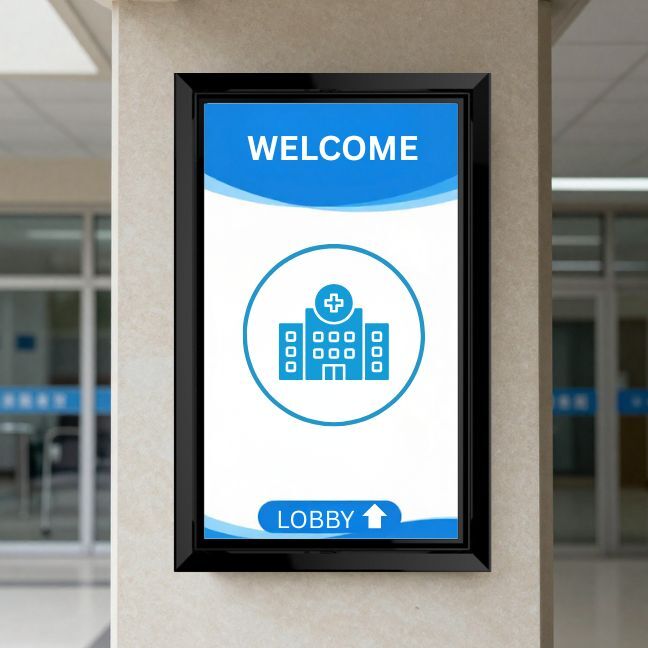
A weather-resistant enclosure protects against these issues by creating a controlled environment around the display. It blocks water, shields against UV rays, reduces glare, and prevents overheating. Enclosures like The Display Shield of The TV Shield PRO also support both wall-mounted and freestanding installations, which gives hospitals flexibility in where they place their outdoor signage.
Having reliable outdoor screens helps emergency departments maintain smooth operations, especially during busy seasons or high traffic periods.
Why The TV Shield PRO Lite, The Display Shield, and The TV Shield PRO Make Sense for Hospitals
For outdoor signage, Hospitals need solutions that are secure, dependable, and easy to maintain. The Display Shield offers hospitals affordable long-term value because it is built to handle both indoor and outdoor hazards. The TV Shield PRO offers the same long-term value with some added convenience and aesthetic features. Both enclosures protect displays from impact, dust, moisture, water, and extreme temperatures, which are constant challenges outdoors.
The Display Shield features a strong polycarbonate front panel that is tough enough to resist breakage while staying clear and easy to view. It includes ventilation that helps reduce heat buildup, so displays can run longer without issues. It also comes with lockable options that prevent tampering, which is important in busy environments.
Hospitals often appreciate that The Display Shield and The TV Shield PRO allow them use standard TV models instead of specialized medical-grade screens. This can save significant costs and reduce downtime because replacements are easier to source. The enclosures are simple to clean and designed for quick access when maintenance is needed.
FAQ
Are display enclosures safe for use in medical environments?
Yes. High-quality display enclosures are built with, among other environments, hospital use in mind. They are designed to withstand repeated cleaning with certain disinfectants, which is something every ER requires. The enclosure acts as a protective shell, so the cleaning products never touch the TV itself. This helps prevent corrosion, moisture damage, and electrical issues. Enclosures like The TV Shield PRO also use safe, non-shattering materials, which reduces the risk of injuries in crowded waiting rooms or hallways.
Can hospitals use regular TVs inside an enclosure?
Absolutely. Many healthcare facilities choose to use standard consumer TVs because they are affordable, easy to replace, and widely available. When paired with a durable enclosure like The TV Shield PRO Lite (which has anti-ligature options if needed), these TVs can last significantly longer in ER environments. The enclosure provides all the protection the TV needs, which means hospitals do not have to pay the premium for medical-grade or commercial-grade displays unless they specifically want to.
Will an enclosure affect visibility or glare?
A properly designed enclosure protects the TV without reducing clarity. The TV Shield PRO Lite uses a clear, impactproof polycarbonate front panel that keeps images sharp and bright. In high-traffic ERs where viewers may stand at different angles, the enclosure still allows for strong visibility. Outdoor-rated versions also incorporate features that help with glare, which is especially useful when screens are placed at exterior entrances or under bright lighting.
How well do enclosures handle constant cleaning and sanitation protocols?
Enclosures are built to handle wash-downs while protecting all sensitive components. Staff can sanitize them quickly (using approved cleaners) without worrying about streaking, discoloration, or moisture getting inside the display. This makes them a smart choice for ERs where infection control procedures happen around the clock.
Can these enclosures be installed outdoors near emergency department entrances?
Yes. Outdoor-rated display enclosures are designed to protect screens from rain, humidity, dust, UV rays, and temperature swings. Hospitals use them near ambulance bays, main emergency entrances, and patient drop-off points. They are helpful for posting wayfinding instructions, waiting updates, urgent notices, or in some areas, advertising. The Display Shield and The TV Shield PRO outdoor models are fully weather-resistant, which means the TV stays protected even during storms or extreme heat.